
by Scott McLeod | Sep 26, 2016 | Leadership and Vision, Learning and Teaching, Our Changing World |
David Brooks said over at the New York Times:
The crucial social divide today is between those who feel the core trends of the global, information-age economy as tailwinds at their backs and those who feel them as headwinds in their face.
And that’s really it, isn’t it?
We have a majority of schools and leaders and educators and policymakers for whom the rapid changes around us feel like strong headwinds, negative forces that continually buffet them in the face. Technology that expands access to others… An ever-shifting, complex, hyperconnected information landscape… The ability to learn whatever we want at any time, in any place, on any path, at any pace… Global economic competition and cooperation… These are all seen as dilemmas. As problems that must be managed and minimized. As destructive challenges to retreat from, often because of a deep longing for a nostalgic yesteryear that was simpler, easier, and allegedly ‘better.’
And then we have the minority of schools and leaders and educators and policymakers for whom the rapid changes around us feel like tailwinds at their back, propelling them forward into unique opportunities to rethink education and do better by kids. These are places that are diving into the constructive complexities and emerging with new beliefs and new mindsets and new practices. They are finding ways to enable deeper thinking and greater student agency and more authentic work – and utilizing digital technologies all along the way to help facilitate and enhance these new forms of learning and teaching.
The headwinds people could learn a lot from the tailwinds people. They could garner ideas about how to pilot new initiatives. How to plant seeds of innovation and grow them in productive ways. How to move more quickly in order to be more relevant. How to empower children and youth and teachers in ways that were unimaginable just a few decades ago. And so on…
Likewise, the tailwinds people could learn from the headwinds people. How to proceed thoughtfully. How to recognize the potential negatives and address rather than ignore them. How to validate the felt needs of communities without being dismissive. How not to get too far ahead of others who just aren’t there yet. And so on…
Ultimately the future lies with the tailwinds people, of course. ‘The future’ always wins. Whether we embrace the world around us or resist it with both heels dug in, the forces of technology, globalization, and learning possibility inevitably will carry the day. As I said in a long ago blog post,
I think it is becoming increasingly clear that our current system of education is going to go away. There are simply too many societal pressures and alternative paradigms for it to continue to exist in its current form.
The only question, then, is: How long are we going to thrash around before we die?
Where do you fall? How do you and your educators and your schools and your communities view the changes around us? As headwinds or tailwinds? Or something else?
Image credit: Against the wind, Vinoth Chandar

by Scott McLeod | Jan 27, 2016 | Leadership and Vision, Our Changing World |
“The magnitude of all of this change… it’s too overwhelming.”
Fair enough. I, too, often feel overwhelmed by it all. But are we going to hunker down and ignore it or lean into it and try to figure out how to adapt? Which one better serves the needs of our children?
Image credit: Day 49 – I can’t do it anymore, Alisa Ryan

by Molly Bleything | Apr 26, 2015 | 21st Century Skills, Activities, Assessment, Assistive and Accessible, Blogging, Communication, Contests, Guest Bloggers, Higher Education, Our Changing World, Social Media, Student Agency and Voice, Youth and Media |
As Worlds came to end, I realized something: experience is everything. In your life you will feel an endless amount of emotion and all of it will have been caused by the experience. We ended up only winning two matches and loosing the rest. The floor mats were squishy because they were new and so the wheels on our robot would sink into the ground. There was a team (The Pandas) and a group that was there (a sponsor) who let us borrow their wheels so that we could drive a little bit better. The rest was just being paired against teams who were better than us, and that’s completely okay. Robotics and the FIRST program isn’t about winning. Yes, it is nice to get an award for being the best but there is so much more to it.
Aside from the arena, there is also the pit area. Think of it like NASCAR for a minute and you will understand. In between matches, if something really bad happens to the robot (Linda,) she will come to the pit to get fixed…and quickly. The pit area is also a place for judges to come talk to us and a place for us to present ourselves to the general public/other teams. We decorate our pit area pretty heavily like many other teams there. It attracts many little kids and a lot of adults too… our theme is pretty much “any-age-friendly.” Gillian and I decided to mix things up this time and we would dance and sing for teams along with statue standing. We had stamps, buttons, key chains, stickers and pamphlets to give out. The team was interviewed twice while down there. Once by the people of FIRST and another time by Student News Net! The FTC played our interview on the live stream and Student News Net will publish our story tomorrow (Monday!)
At closing cerimonies Dean Kamen, Woodie Flowers, and many others gave speeches, handed out awards and introduced new technology to us. They gave a senior recognition and a small speech to all of us…we got to stand up. In a stadium of thousands it was intimidating. It was exciting and made everyone jittery for the next couple of years. It got me pumped up for the next couple of years. After that, we had the “after party.” We got to hear Christina Grimmie perorm along with BoysLikeGirls a pop punk band. We didn’t end up getting back to the hotel until around 11 PM-ish and I got home about 5 minutes about (6:00 PM.) It’s really nice to be back in Iowa around familiar things…like my bed. It has been a long but extremely successful week for the Sock Monkeys. We hope to do this all over again next year-even though I nor Logan, Caleb, and Giovanni will be there.
A HUGE thank you to Scott McLeod for letting me share the experiences of FIRST again and a HUGE thank you to my community/school for helping us get to where we are now!


 f


by Molly Bleything | Apr 22, 2015 | Gaming, Guest Bloggers, Higher Education, International, Interviews, Our Changing World, Presentations, Professional Development, Safety and Security, Social Media, Youth and Media |
Hey guys! So today has been crazy and it is currently only 11:11 (make a wish!) I’m sitting upstairs in Union Station, away from the pit area so that I can blog. We can’t have wifi or hot spots in the pit area OR the arena because it will interfere with the robots and the game. We haven’t started playing matches yet, but we did have judging this morning! So, in the FTC judging happens at different times at every competition. This year is happened at 9:30 AM….bright and early. In judging we have the whole team, our engineering notebook, our robot, and anything extra that we think we might need to show to judges. The judging room is usually 2-4 people, our coach and obviously…us! Every team has a different idea or strategy that they use to talk to judges. Public speaking can sometimes be really nerve wrecking so we practice before we go in and make sure the team knows what they are saying. It is cool to see how the team becomes more confident and bold with speaking as the season goes on. For the World Championship we chose to set up our blogging like this:
1. Everyone will walk in and shake the judges hand while lining up saying “hello” or “how are you?”
2. We will the the judges stickers, buttons and key chains.
3. Logan Gross (one of the main speakers/a senior on the team) will be a key speaker along with me (Molly…who is also a senior) He will help transition from one topic to the next and I will help with forgotten or missing information.
4. As we step forward to speak, we will introduce ourselves.
5. After we all talk about what we have done/presented everything to the judges, we will ask if they have any questions (assuming there is time left..)
We only have 20 minutes to tell them about 9 months of progress, so sometimes it can get kind of tricky and we have to choose the more important topic. And today…for the FIRST time this season, we were able to finish judging AND answer questions from the judges which is a huge accomplishment considering we have a team of 17. Now that judging is over, the robot has to go to judging. She has to pass hardware/software inspections and she has to be able to fit in a 18×18 inch box. Only 4 or 5 of the team members go to robot inspections though. It is usually our main programmer, and our drive team. While they are doing that the rest of the Sock Monkeys have time to take pictures, scout, have some free time, or sit in the pit area. I usually sit in the pit area, but right now I am blogging. 😛 The people who sit in the pit area always smile, and say “Hi” to as many people as possible. A lot of other teams will come and scout us out, asking about our robots abilities, strengths, and weakness’s. We will have a lunch break from 12:30-1:30 and then we will continue on our day. Today isn’t very exciting because we haven’t started matches yet. We have gotten to meet the South Korean’s, the Australians, the Middle Easterners, and the Canadians though! Everyone else has been from the United States so far.
I’ll post tonight again with all of the pictures, etc!
![Team 4443 Sock Monkeys Once Again!]()
by Molly Bleything | Apr 21, 2015 | Blogging, Communication, Guest Bloggers, Higher Education, International, Interviews, Learning and Teaching, Management and Operations, Mind Dump, Miscellaneous, Online Learning, Our Changing World |
Hey guys, it’s Molly again! And for those of you who don’t know who I am…well, I am Molly. I am a senior in high school this year (12th grade.) I am a part of Team 4443: Sock Monkeys and we are a robotics team through the FTC.
What does FTC stand for/mean? The acronym FTC stands for First Tech Challenge, which is part of the FIRST program. FTC consists of students grades 8-12 and allows students to experience parts – small or large – of the engineering world. Robotics teams start the competition season by learning what that year’s challenge is; they then immediately get to work on designing and building a robot that is best suited to that year’s challenge. The robot also has certain limitations, in parameters such as size, materials, and shape. There are also other regulations that must be followed, like certain restrictions on modifications to parts and rules in the competition. Teams have a lot of freedom with their designs, and many teams use 3D printed parts designed using programs like Creo or AutoCad. In addition to the physical aspect of building the robot, participants also sharpen their minds by solving the problems presented to them (both in robot design and during competition matches) and by building relations with other teams and their community. The core principle of FTC is “Gracious Professionalism” – giving respect and help in order to make the FTC program fair and fun, while bettering all those involved. FTC and FIRST provide participants with the tools they need to build useful skills that will help them succeed, whether they pursue engineering or any other path in life.
Why are we blogging? We are blogging because we sent an email to Scott McLeod (who talked to us last year when we went to Worlds the first time) and he asked us to post updates on how we’re doing. We also update our adventures on our website and other social media:
Website: oskyrobotics.weebly.com
Facebook: search “Sock Monkeys”
Twitter: @4443SockMonkeys
If you have any personal questions, email us at
How did we get here? We got here (to the World Championship) because we qualified at the FTC North Super Regional competition, but our story stretches back further than that. We hosted a competition at our high school on November 15th, where I was volunteer coordinator. We qualified for the State competition at our league championship on January 10th, and this meant that we were moving on to the big leagues. From there we competed at State (March 6-7) and moved on to the North Super Regional (March 26-28). There, we qualified and moved on to the World Championship!
Where are we right now? Right now, we are at the FTC World Championship in St. Louis, Missouri getting ready to compete with 128 teams from countries around the world. Between April 22nd and 25th, we’ll compete like we have all year, but we’ll be with (and against) the best FTC teams across the globe.
What is the game this year? The 2014-2015 season FTC game is called “Cascade Effect.” Robots drop different sized whiffle balls into tubes of varying heights to score points. Two alliances of two teams each have 2 1/2 minutes to score the balls, move the goals, and overall try to outperform the other team. Here’s a link to the full explanation of the game: https://www.youtube.com/watch?v=ABmBxCwHV94
What are some accomplishments we have made this season other than in competitions? FIRST is much more than just building a robot and competing in matches. Teams also build lasting friendships with other teams and help out their community. The Sock Monkeys have an address book containing many of the teams that we’ve met, which allows us to keep in contact with them throughout the season and help them with any problems they may have. We have also featured as stories on several different news outlets, one being CRI (here’s a link to the video! ) and the other being the Oskaloosa Herald, our town newspaper (here’s an article they wrote about us ) We have also done a lot of outreach!


 Please watch the posts and stay updated!

by Scott McLeod | Feb 12, 2015 | Leadership and Vision, Learning and Teaching, Our Changing World |
Mike Crowley said:
many of us cling to the certainties of the way we were educated ourselves as “the right way” to do so. Any deviation from the tried and trusted can elicit nervousness and uncertainty, especially – and unsurprisingly – from parents. Our faith in the tried and the trusted is a little bit like holding onto the handrails in the deep end of a swimming pool. When schools suggest that the depth of experience is more vital than just skimming the surface, we are looked at sceptically. The same does not happen with other professions, of which we seem to be far more trusting. I went to my dentist recently in a lot of pain. He suspected my problem was sinusitis and pointed out that he had just invested in a hi-tech system that used a high resonance 3D imaging model to offer a visual understanding of the nature of pain itself. Did I resist this innovation? Question the use of this new technology? Ask if he knew what he was doing? Suggest that this is not what my dentist would have done in 1976? No, of course not. This only happens in schools.
via http://crowleym.com/2015/02/07/lifeworthy-learning-close-encounters-of-the-third-kind
Image credit: Dental xray machine, Diana Beideman
by Scott McLeod | Jan 21, 2015 | Leadership and Vision, Learning and Teaching, Mind Dump, Our Changing World, Safety and Security, Tech Integration |
Mike Crowley said:
There can be no question but that technology can provide the potential for isolation, for synthetic relationships, for a sedentary lifestyle, an anxiety-ridden social existence, a failure to focus, concentrate, and engage. But surely this is a worst-case scenario conception of technology without balance, without thoughtful schools, informed, engaged parents? An education system that emphasises the need to be cultured as well as educated, well-read as well as literate, articulate as well as able to skim, physically healthy as well as mentally engaged … surely an individual in this context will only benefit from the interactive tools of contemporary technology to allow them to create, design, persuade and engage? Yes, perhaps our brains will be rewired in the process, but isn’t that what the brain has always done throughout history?
via http://crowleym.com/2014/11/03/rewired-brains-unbalanced-lives
by Scott McLeod | Jan 12, 2015 | Higher Education, Our Changing World |
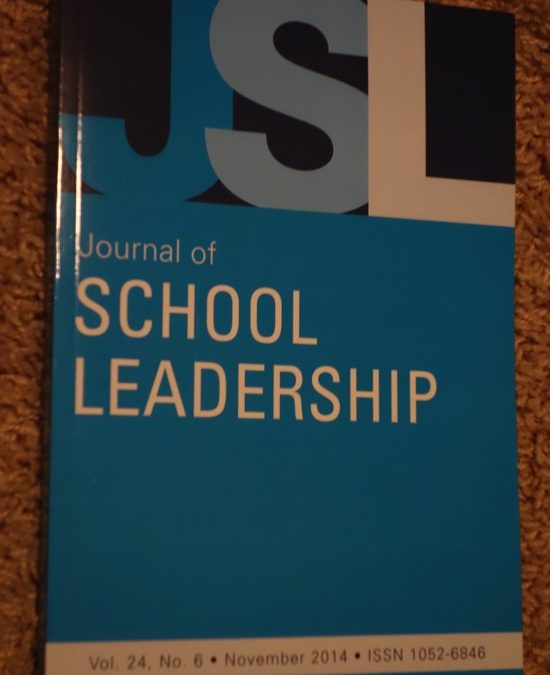
Time it took my article to appear in print: 3 years.
Time it took this blog post to appear online: 5 seconds.
[P.S. Not trying to pick on JSL; they’re great. This is an issue endemic to most of our print publications in higher education…]
ADDENDUM: Time it took to edit this post four times: 3 minutes. Time it would take to edit a printed journal article post-production: ha ha ha ha!

by Scott McLeod | Jan 11, 2015 | Mind Dump, Our Changing World, Social Media |
Doc Searls and David Weinberger said:
We need to remember that delivering mass media is the least of the Net’s powers.
The Net’s super-power is connection without permission. Its almighty power is that we can make of it whatever we want.
via http://cluetrain.com/newclues
by Scott McLeod | Nov 6, 2014 | 21st Century Skills, Leadership and Vision, Learning and Teaching, Mind Dump, Our Changing World |
Marion Brady said:
Common sense says we educate to help learners make better sense of experience – themselves, others, the world. Those Common Core Standards above say something very different, that we educate to help learners make more sense of text – words on a page. There’s no acknowledgement of the myriad other ways humans learn, no apparent recognition of the inadequacies of text in preparing the young for an unknown future, no apparent appreciation of the superior power of firsthand knowledge compared to secondhand knowledge, no provision for adopting ways of learning yet to be discovered.
Yes, it’s important for learners to know what others have to say, but facing a complex and unknown future, it’s far more important that the young learn how to figure things out for themselves, more important that they know how to create new knowledge as it’s needed, more important that they be able to imagine the as-yet-unimagined.
via http://www.washingtonpost.com/blogs/answer-sheet/wp/2013/11/07/the-biggest-weakness-of-the-common-core-standards
The idea of the superior power of firsthand knowledge compared to secondhand knowledge particularly resonates with me. Problem-based learning approaches combined with digital technologies can be a powerful mechanism for fostering students’ firsthand acquisition of knowledge, skills, and experiences…


